How to test your rain sensor and make the first fixes
Your rain sensor controls wiper speed automatically by detecting water on the windshield through infrared light and total internal reflection. When it stops responding, the most direct first step is a basic functionality test you can run in your driveway.
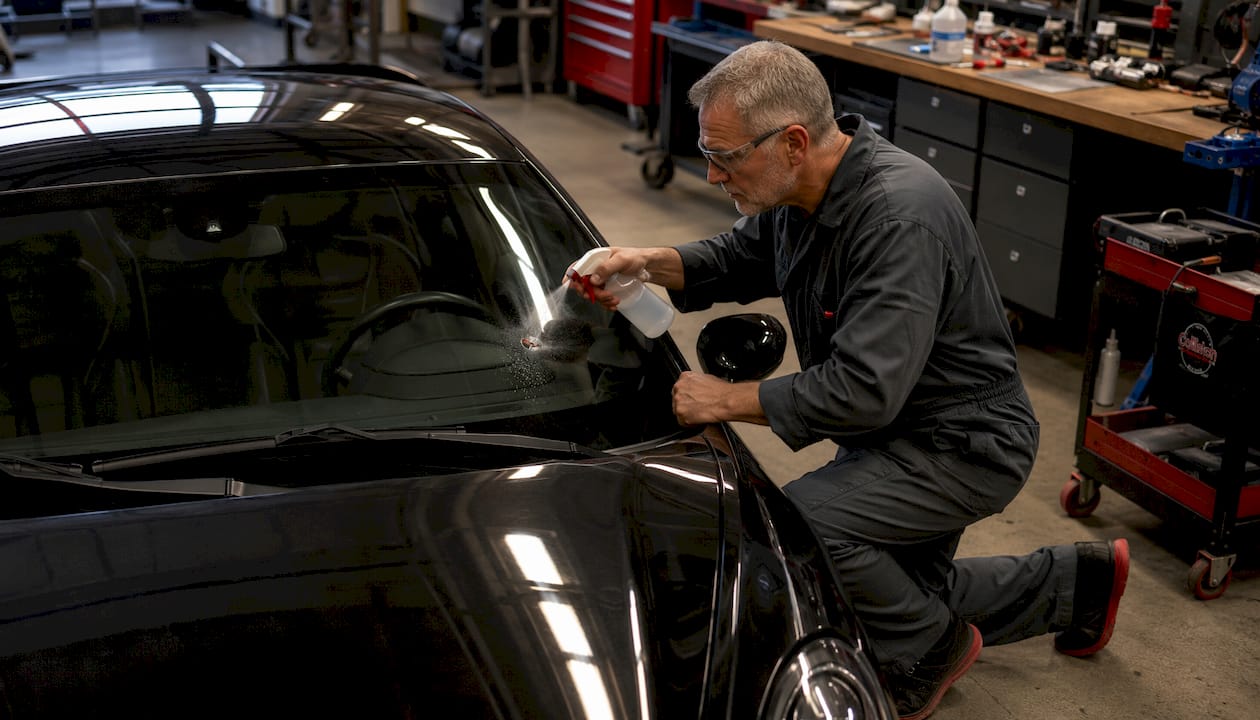
Set your wiper stalk to the automatic intermittent position, then spray water directly onto the sensor area behind the rearview mirror. If the wipers activate and adjust speed to the simulated rain intensity, the sensor and control module are communicating correctly. No response, but manual wiper stages still work? That points to a sensor or calibration issue rather than a wiper motor problem.
Quick first-line checks before calling a shop:
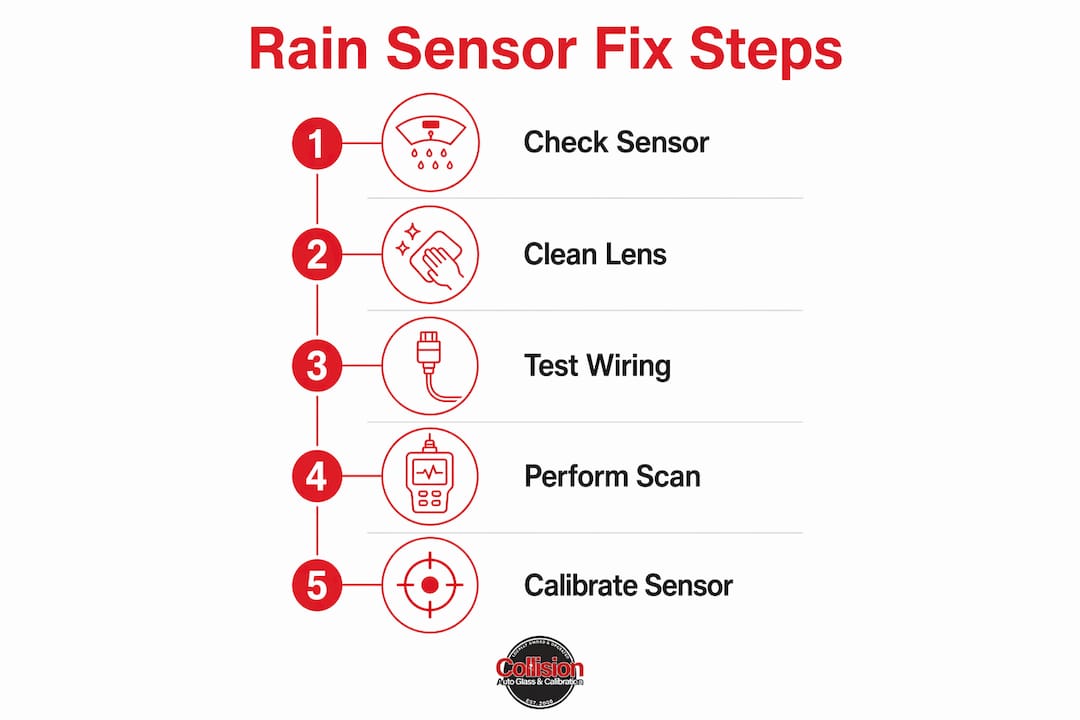
- Clean the sensor contact area on the inside of the windshield with a 50/50 mix of isopropyl alcohol and water.
Oily film, wax residue, or washer fluid buildup can scatter the infrared signal enough to cause false readings or no readings at all. - Inspect the gel pad or adhesive coupling between the sensor and glass for visible air bubbles, yellowing, or separation. Even a small air gap invalidates the sensor’s optical path.
- Check for any aftermarket tint film, protective coating, or sticker placed over the sensor zone. Non-factory films interfere directly with infrared transmission.
- Verify the sensor bracket is seated firmly and the electrical connector is fully engaged with no corrosion on the pins.
Pro Tip: Always test with all vehicle doors closed and the engine running. Many vehicles, including Mercedes-Benz models, are programmed to disable wiper activation when a door is open, which can make a functioning sensor appear faulty.
If none of these steps restore function, an OBD-II diagnostic scan is the logical next move. Fault codes such as B1101 (rain sensor internal fault), B1103 (sensor not calibrated), or U0140 (no communication with sensor) will identify whether the issue is electronic, optical, or calibration-related.
What actually causes rain sensor failures?
The most common failure point is the optical coupling between the sensor and the windshield glass. This interface relies on a specialized gel pad or adhesive layer, and air bubbles or contamination in that layer will disrupt the infrared signal regardless of whether the sensor module itself is healthy. Technicians working in the field often struggle to achieve a perfect vacuum-sealed bond without the heating devices and vacuum systems used by windshield manufacturers, which is why sensor issues after a windshield replacement are so common.
Aftermarket tints and protective films are another frequent culprit. Non-factory films scatter infrared light, causing the sensor to trigger constantly or fail to detect rain at all. The same problem can arise from using harsh glass cleaners or wax products in the sensor zone.
Other root causes worth checking:
- Electrical faults: voltage spikes, moisture ingress, or a corroded connector can disable the sensor module entirely.
- Windshield replacement with incompatible glass: a replacement pane with a different tint, coating, or thickness may require a different sensor module or recalibration to function correctly.
- Optical pad aging: coupling materials yellow and harden over heat cycles, gradually lowering signal quality until the sensor stops responding reliably.
- Software calibration gap: after any windshield replacement or electrical work, many vehicles require the sensor to be re-initialized through OBD diagnostics before it will operate in automatic mode.
The rain sensor does not directly control your wipers. It sends data to the Body Control Module (BCM) via a LIN or CAN interface, and the BCM manages wiper speed and mode. That means a fault anywhere in the communication chain, including the BCM itself, can produce symptoms identical to a failed sensor.
Addressing erratic sensor behavior early matters beyond wiper convenience. Delayed diagnosis can compromise linked ADAS functions including automatic headlights and traffic sign recognition, turning a minor annoyance into a broader safety concern. The role of glass in ADAS systems is more interconnected than most drivers realize, which is why a sensor fault should never be left to linger.
Key fact: Proper sensor installation requires cleaning the glass with a 50/50 isopropyl alcohol and water solution, applying a primer, then pressing the sensor with rolling pressure using radiant heat to eliminate air bubbles. Skipping any step creates the exact conditions that cause sensor failure.
Which Portland providers can diagnose and repair your rain sensor?
Portland has a range of options depending on whether you need parts, tools, or full professional service. The providers below cover the full spectrum from DIY supply to certified glass and ADAS work.
| Provider | Service offered | Expertise / reputation | Location | Rating | Parts availability | Additional services |
|---|---|---|---|---|---|---|
| Meineke Car Care Center | General auto repair, sensor support | Broad mechanical expertise, high customer volume | Portland, OR | 4.3★ (Google rating, 897 reviews) | Limited sensor parts | General diagnostics |
| Collision Auto Glass & Calibration | Windshield replacement, glass repair, ADAS calibration | SIKA and DOW Automotive certified; AGRSS-compliant; lifetime no-leak guarantee | Portland, OR | 4.9★ (Google rating, 362 reviews) | OEM-quality glass and sensor components | In-house ADAS calibration, insurance billing, same-day service, free mobile install |
| O’Reilly Auto Parts (SE 122nd Ave) | Auto parts retail | Large parts inventory, knowledgeable counter staff | Portland, OR | 4.2★ (Google rating, 718 reviews) | Extensive sensor and electrical parts | Loaner tools, battery testing |
| O’Reilly Auto Parts (NE Sandy Blvd) | Auto parts retail | Convenient second Portland location | Portland, OR | 4.2★ (Google rating, 718 reviews) | Extensive sensor and electrical parts | Loaner tools, battery testing |
| O’Reilly Auto Parts (multiple locations) | Auto parts retail | Multiple Portland locations for convenience | Portland, OR | 4.2★ (Google rating, 718 reviews) | Sensor components, wiring, connectors | Code reading, loaner tools |
| Batteries Plus | Batteries, bulbs, electrical components | Specialist in vehicle electrical supply | Portland, OR | 4.6★ (Google rating, 354 reviews) | Vehicle batteries, fuses, bulbs | Battery testing and installation |
| Pearl ACE Hardware | Hardware, tools, cleaning supplies | Well-stocked neighborhood hardware | Portland, OR | 4.5★ (Google rating, 601 reviews) | Isopropyl alcohol, cleaning tools | General hardware |
| Ankeny Hardware | Tools, cleaning agents, basic supplies | Trusted local neighborhood store | Portland, OR | 4★ (Google rating, 114 reviews) | Basic cleaning and hand tools | General hardware |
Breaking down the options by use case:
Meineke Car Care Center handles general diagnostics and mechanical repairs across a wide range of vehicles. For drivers whose sensor issue is tied to a broader electrical or mechanical problem, Meineke’s general repair capability makes it a practical starting point.
O’Reilly Auto Parts, with multiple Portland locations including SE 122nd Ave and NE Sandy Blvd, is the go-to source when you need the physical parts: replacement sensors, wiring connectors, or the isopropyl alcohol and primer required for a proper reinstallation. Their loaner tool program also supports DIY repairs.
Batteries Plus is worth a visit when the sensor fault traces back to an electrical supply issue, a blown fuse, or a failing vehicle battery causing voltage irregularities that affect sensor communication.
Pearl ACE Hardware and Ankeny Hardware both stock the cleaning supplies and hand tools needed for sensor area maintenance. Neither offers diagnostic or repair services, but for a driver handling their own cleaning and upkeep, both are convenient Portland options.
Collision Auto Glass & Calibration is the clear choice when the sensor issue involves the windshield itself, requires ADAS recalibration, or demands certified installation. Their SIKA and DOW Automotive certifications, combined with AGRSS-compliant procedures and a lifetime no-leak guarantee, address the most technically demanding scenarios: post-replacement sensor re-initialization, optical coupling restoration, and full ADAS system verification. Direct insurance billing removes the paperwork burden, and same-day service with free mobile installation within Portland means you are not waiting days to get back on the road safely.
How to choose the right repair service for your situation
Not every rain sensor problem requires the same level of expertise. Matching the repair to the right provider saves time and avoids paying for services you do not need.
Factors to evaluate before booking:
- Certification and training: For any repair involving windshield removal or ADAS components, confirm the shop holds recognized certifications such as SIKA, DOW Automotive, or AGRSS compliance. These standards govern adhesive use, installation procedures, and calibration protocols.
- Calibration capability: After a windshield replacement, ADAS calibration is not optional on most modern vehicles. A provider without in-house calibration equipment will send you to a dealership for a second appointment, adding cost and delay.
- Warranty coverage: A lifetime no-leak guarantee signals that a shop stands behind its installation work. Ask specifically whether the warranty covers sensor function, not just glass integrity.
- Insurance handling: Direct billing to your insurer eliminates out-of-pocket costs on covered repairs. Confirm the shop bills insurers directly before you commit.
- Proximity and scheduling: Same-day or mobile service matters when your wipers are unreliable in Portland’s rainy season. Verify availability before assuming a shop can fit you in quickly.
For guidance on evaluating auto glass shops specifically, the tips for choosing a shop from Collision Auto Glass & Calibration lay out the key questions to ask any provider before work begins.
A sensor that does not operate correctly on the original glass will not work on a newly installed windshield either. If your sensor was already erratic before a replacement, the underlying fault must be resolved first, not carried over to new glass.
Collision Auto Glass & Calibration: certified rain sensor and ADAS service in Portland
When your rain sensor issue connects to the windshield or requires ADAS recalibration, Collision Auto Glass & Calibration offers something most general repair shops cannot: certified glass installation paired with in-house calibration under one roof.
Certified through SIKA and DOW Automotive and operating to AGRSS standards since 2008, Collision Auto Glass & Calibration handles windshield replacement, optical sensor reinstallation, and full ADAS system verification as a single appointment. The lifetime no-leak guarantee covers every installation, and direct insurance billing means most customers pay nothing out of pocket. Same-day service and free mobile installation within Portland make the process straightforward, whether your vehicle is at home, at work, or at the side of the road.
For answers to common questions about glass repair and sensor service, visit the auto glass repair FAQ or request a quote directly at collisionautoglass.com.
Key Takeaways
A rain sensor not working is most often caused by optical coupling failure, contamination, or a missed calibration step after windshield replacement, all of which are diagnosable and fixable with the right approach.
| Point | Details |
|---|---|
| Start with a spray test | Set wipers to auto, spray water on the sensor zone, and observe whether wipers activate and adjust speed. |
| Check the optical coupling first | Air bubbles or contamination in the gel pad between sensor and glass cause most failures, regardless of module health. |
| Tints and films cause interference | Aftermarket films scatter infrared light and trigger false readings or complete sensor failure. |
| Calibration is required after glass work | Most modern vehicles need OBD-based sensor re-initialization after any windshield replacement or electrical repair. |
| Collision Auto Glass & Calibration | Handles certified windshield replacement, sensor reinstallation, and in-house ADAS calibration in Portland with a lifetime no-leak guarantee. |
FAQ
Why is my rain sensor not working after a windshield replacement?
After a windshield replacement, the sensor’s optical coupling to the new glass is disrupted and most vehicles require software re-initialization through OBD diagnostics before the sensor will operate in automatic mode. If the replacement glass has a different tint, coating, or thickness than the original, the sensor module may also need to be replaced or recalibrated.
Can I fix a rain sensor myself?
Cleaning the sensor area with isopropyl alcohol and checking for tint film or connector issues are reasonable DIY steps. Replacing the gel pad or performing OBD calibration requires specialized tools and training, so those steps belong with a certified technician.
How long does rain sensor repair or calibration take?
A basic sensor cleaning or reconnection takes under an hour. Full ADAS calibration after a windshield replacement typically requires a same-day appointment, and providers like Collision Auto Glass & Calibration offer same-day service in Portland.
Does auto insurance cover rain sensor repair?
If the sensor issue stems from a covered windshield replacement, most comprehensive auto insurance policies cover the repair including calibration. Direct insurance billing, as offered by Collision Auto Glass & Calibration, removes the need to file paperwork yourself.
What fault codes indicate a rain sensor problem?
Common OBD codes include B1101 for internal sensor faults, B1103 for missing calibration, and U0140 for no communication between the sensor and the BCM. A diagnostic scan at a qualified shop will identify which code applies to your vehicle.
Recommended
- Emergency Preparedness Tips for Living in Portland, OR – Collision Auto Glass & Calibration
- How to Temporarily Fix a Crack in Portland, OR – Collision Auto Glass & Calibration
- Exploring Portland’s Mild Climate – Collision Auto Glass & Calibration
- Is It Illegal to Drive with a Cracked Windshield in Portland, Oregon? – Collision Auto Glass & Calibration
source https://collisionautoglass.com/rain-sensor-not-working/


No comments:
Post a Comment